If you’ve ever published a blog and wondered why it didn’t bring in traffic, you’re not alone. Creating content is one thing—but making it work is where most businesses struggle. That’s where seo content optimisation and seo content creation come into play.
Whether you’re running a startup, managing a brand, or scaling a digital presence, understanding how these two elements work together can change everything. And if you’re exploring professional content generation services, knowing the fundamentals helps you make smarter decisions from the start.
Let’s break it down in a way that actually makes sense—and more importantly, works in real-world scenarios.
What is SEO Content Creation?
At its core, seo content creation is about producing content that is designed to rank on search engines while also engaging real people.
It’s not just about inserting keywords into a blog post. It’s about understanding
- What your audience is searching for
- Why they’re searching for it
- How you can provide a better answer than anyone else
Think of it this way: if someone searches for “best digital marketing strategy for startups,” they’re not looking for a textbook definition. They want clarity, direction, and something actionable.
What Good SEO Content Looks Like
Effective SEO content
- Answers a specific question or solves a problem
- Uses natural, conversational language
- Is structured for easy reading (headings, short paragraphs, lists)
- Includes relevant keywords without overdoing it
For example, a well-written service page doesn’t just describe what you offer—it anticipates user concerns, explains your process, and builds trust.
What is SEO Content Optimisation?
While creation is about building content, seo content optimisation is about refining it so search engines—and users—can fully understand and value it.
Even great content can underperform if it’s not optimised properly.
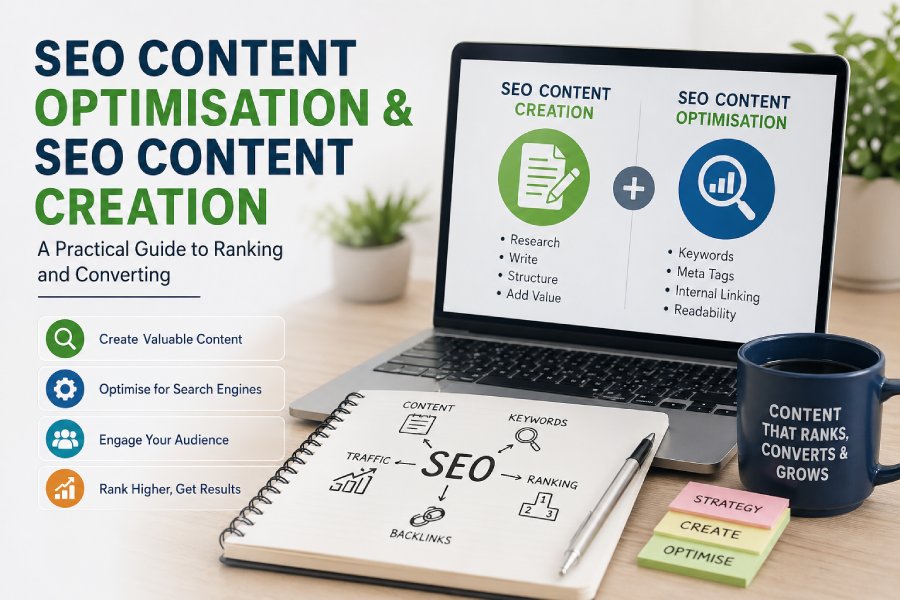
Key Elements of SEO Content Optimisation
Here’s what optimisation typically involves
- Keyword Placement: Strategic use of primary and secondary keywords
- Meta Tags: Optimised title tags and descriptions that improve click-through rates
- Internal Linking: Connecting relevant pages to guide users and search engines
- Content Structure: Clear headings (H1, H2, H3) and logical flow
- Readability: Short paragraphs, simple language, and scannable formatting
Imagine writing a brilliant blog but forgetting to include headings or meta descriptions—it’s like having a great product with poor packaging.
SEO Content Creation vs Optimisation: Why You Need Both
A common mistake businesses make is focusing on one and ignoring the other.
- Content creation without optimisation = hard to find
- Optimisation without quality content = hard to trust
You need both working together.
A Simple Analogy
Think of seo content creation as building a house, and seo content optimisation as designing the interiors and adding signage so people can find and enjoy it.
Without structure, your house collapses. Without optimisation, no one visits.
How to Create SEO Content That Actually Performs
Let’s move beyond theory and look at what works in practice.
1. Start with Search Intent
Before writing anything, ask
- What is the user trying to achieve?
- Are they looking for information, comparison, or a solution?
For example
- “What is SEO content?” → Informational
- “Best SEO agency” → Transactional
Your content should match that intent precisely.
2. Build Around a Primary Topic (Not Just Keywords)
Instead of forcing keywords into your content, build around a central topic.
For this blog, the focus is
- SEO content optimisation
- SEO content creation
Everything else—examples, tips, structure—supports these themes naturally.
3. Use a Natural Writing Style
Search engines have evolved. They don’t reward robotic content anymore.
Write like you’re explaining something to a colleague
- Use simple sentences
- Avoid jargon where possible
- Keep it conversational
If it feels unnatural to read, it won’t perform well.
4. Structure Matters More Than You Think
People don’t read blogs—they scan them.
Make it easy
- Use clear headings
- Keep paragraphs short (3–4 lines max)
- Add bullet points for clarity
This improves both user experience and SEO performance.
5. Add Depth, Not Just Length
Long content isn’t automatically better.
What matters is whether your content
- Covers the topic thoroughly
- Answers related questions
- Provides useful insights
For example, instead of just defining SEO content, this blog explains how to apply it—because that’s what readers actually need.
Practical Example: How Businesses Use SEO Content
Let’s say you run a digital marketing agency.
Instead of writing generic blogs like
- “What is SEO?”
You could create
- “SEO Content Strategy for Local Businesses”
- “How SEO Content Helps Service-Based Companies Get Leads”
These topics are
- More specific
- More relevant
- More likely to convert
That’s the difference between content that exists and content that performs.
Common Mistakes to Avoid
Even with the best intentions, it’s easy to go off track. Here are some pitfalls:
-
Overusing Keywords
Stuffing keywords like seo content optimisation into every paragraph makes content unreadable and ineffective.
-
Writing Without Strategy
Publishing random blogs without a clear plan leads to inconsistent results.
-
Ignoring Updates
SEO isn’t “set it and forget it.” Content needs regular updates to stay relevant.
-
Focusing Only on Rankings
Traffic is important—but conversions matter more. Your content should guide users toward action.
How SEO Content Supports Business Growth
When done right, SEO content becomes a long-term asset.
It helps you
- Attract organic traffic consistently
- Build authority in your niche
- Educate potential customers
- Generate leads without constant ad spend
Unlike paid ads, good content keeps working in the background—bringing in value over time.
Bringing It All Together
To truly benefit from seo content optimisation and seo content creation, you need a balanced approach.
Create content that
- Solves real problems
- Matches user intent
- Is structured for readability
Then optimise it so
- Search engines can understand it
- Users can find it easily
- It performs consistently over time
It’s not about chasing algorithms. It’s about creating something genuinely useful—and making sure it reaches the right audience.
If you’re looking to scale your efforts without compromising quality, working with a team that understands both strategy and execution can make all the difference.
FAQ’s

Elevate your online presence with skowd.co. Discover comprehensive services in web development, digital marketing, and branding. Visit now to unlock the potential of your business online.