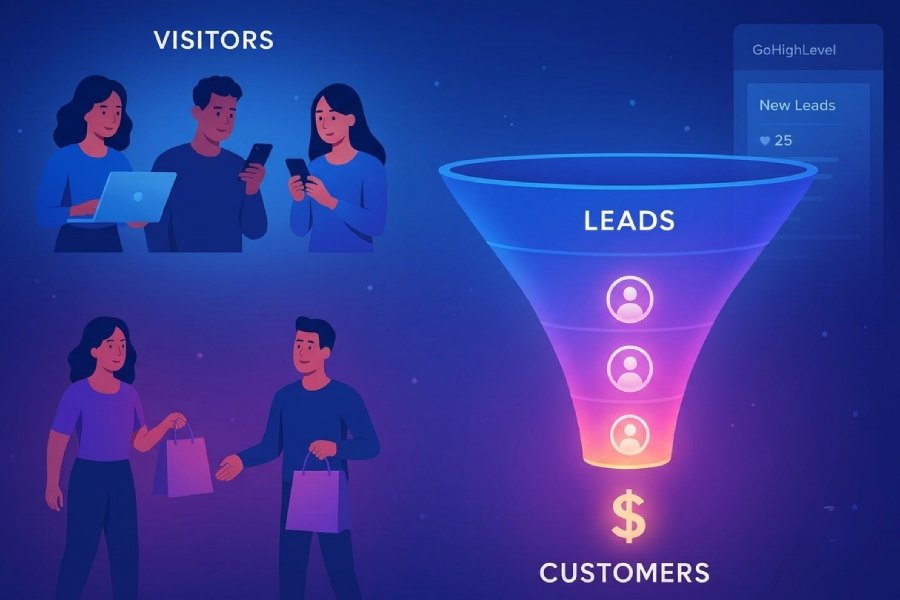
Getting more traffic to your website is an important goal, but traffic alone doesn’t grow a business. Whether you run a service-based business, SaaS company, healthcare practice, law firm, or online store, success depends on how many visitors take meaningful actions. These actions could include filling out a contact form, booking a consultation, requesting a quote, subscribing to a newsletter, or making a purchase. That’s why the best digital marketing company in India focuses not only on driving traffic but also on optimising conversions that lead to real business growth.
This is where website conversion optimization comes in. It focuses on improving your website so visitors are more likely to become leads or customers. Instead of spending more on attracting new visitors, you can maximize the value of the audience you already have. Tools like Google Analytics 4 (GA4), Google Search Console, Microsoft Clarity, and Hotjar make it easier to understand visitor behavior and identify opportunities to improve conversions.
Focus on Quality, Not Just Traffic
A website with 500 highly interested visitors often performs better than one with 5,000 visitors who leave without interacting. Instead of measuring success only by page views, focus on engagement and conversions.
Ask yourself
- Are visitors spending time on important pages?
- Are they clicking your calls-to-action (CTAs)?
- Are they submitting inquiry forms or booking appointments?
- Which pages have the highest exit rates?
Understanding user intent and visitor behavior helps you improve website conversion rate while creating a better experience for your audience.
Create a Strong First Impression
Visitors form an opinion about your website within seconds. If your pages load slowly or your message isn’t clear, many users will leave before exploring further.
A high-converting website should immediately answer
- Who are you?
- What do you offer?
- Why should visitors choose you?
- What should they do next?
Fast Loading Website + Clear Value Proposition = Better Engagement
Use simple headlines, clean layouts, easy navigation, and visible CTAs. You can also monitor your site’s performance using Google PageSpeed Insights or Lighthouse to identify speed and usability issues that may affect conversions.
Build Trust Before Asking for Action
People are more likely to contact businesses they trust. Trust signals reduce uncertainty and encourage visitors to take action.
Consider including
- Customer testimonials
- Google reviews or ratings
- Case studies
- Client logos
- Industry certifications
- Awards and recognitions
- Secure contact and privacy information
These elements reassure visitors that your business is reliable and experienced. When users feel confident, they are much more likely to convert website visitors into customers.
Make Every Step Easy
A complicated website creates unnecessary friction. Long forms, confusing menus, and hidden contact details often cause visitors to leave.
| Common Issue | Better Solution |
|---|---|
| Long contact forms | Keep forms short and include only essential qualifying questions. |
| Difficult navigation | Use clear menus, intuitive navigation, and a well-structured layout. |
| Hidden contact details | Display contact information prominently on key pages. |
| Poor mobile experience | Optimize the website for all screen sizes and mobile devices. |
Remember that a large percentage of users browse on mobile devices. A responsive, fast-loading website makes it easier for visitors to engage with your business anywhere.
Use Analytics and Heatmaps to Improve the User Journey
Instead of guessing what needs improvement, use data to understand how visitors interact with your website.
Start by tracking performance with Google Analytics 4 (GA4). It helps you measure traffic sources, user engagement, conversion events, and user journeys. Pair this with Google Search Console to identify the search queries bringing users to your website and discover pages with high impressions but low click-through rates.
To understand visitor behavior, use Microsoft Clarity, Hotjar, or Crazy Egg. These tools provide heatmaps, click maps, scroll maps, and session recordings that reveal how users navigate your website.
These insights help answer important questions:
- Where are visitors leaving the website?
- Are users scrolling far enough to see your CTA?
- Which buttons receive the most clicks?
- Which sections are ignored?
- Are visitors abandoning forms before submitting them?
Based on these insights, you can confidently update your content, simplify navigation, move important sections higher on the page, improve CTAs, or redesign layouts that create friction. Instead of making assumptions, you’re improving your website based on real user behavior.
Test, Learn, and Improve
Website conversion optimization is an ongoing process. Even small improvements can produce better results over time.
Try testing different versions of:
- Headlines
- CTA buttons
- Images
- Contact forms
- Landing page layouts
For example, compare “Contact Us” with “Book Your Free Consultation” to see which CTA generates more inquiries. Platforms like VWO and Optimizely allow you to run A/B tests and measure which version performs better. Continuous testing helps you understand what resonates with your audience and supports long-term growth.
Keep Your Marketing and Website Consistent
Your website should deliver exactly what your advertisements, emails, or social media posts promise. If users click an ad offering a free consultation, the landing page should clearly explain how to book it.
Many visitors won’t convert during their first visit. Stay connected through email campaigns, remarketing ads, and valuable blog content to encourage them to return when they’re ready.
Final Thoughts
Website conversion optimization isn’t about redesigning your website overnight—it’s about making continuous improvements that help visitors take meaningful action. By creating a fast, user-friendly website, building trust, simplifying navigation, tracking visitor behavior with tools like GA4, Google Search Console, Microsoft Clarity, and Hotjar, and regularly testing new ideas using VWO or Optimizely, you can steadily improve website conversion rate without increasing your marketing budget.
Rather than focusing only on bringing more visitors to your website, focus on helping existing visitors achieve their goals. A website that offers a smooth user journey, answers questions clearly, and removes obstacles will naturally generate more leads, inquiries, and customers over time.

Elevate your online presence with skowd.co. Discover comprehensive services in web development, digital marketing, and branding. Visit now to unlock the potential of your business online.